

Table of Contents
- Why Fairy Tale Merchandise Is Booming Among Adult Collectors
- High-End Fairy Tale Collectibles: Figurines, Dolls, and Limited Editions
- Fairy Tale Subscription Boxes: Monthly Magic for Grown-Up Fans
- Fairy Tale Home Decor for Adults: Displaying Your Collection With Style
- How to Start Collecting Fairy Tale Merchandise: A Step-by-Step Approach
- Ethical Sourcing and Community: Building a Collection You Can Stand Behind
- Frequently Asked Questions
Last Updated: September 27, 2026
Why Fairy Tale Merchandise Is Booming Among Adult Collectors
Collecting fairy tale merchandise for adults has shifted from a niche hobby to a serious pursuit, driven by nostalgia, craftsmanship, and a desire to display the stories that shaped us. This guide walks through the world of adult collecting, from high-end figurines to display and preservation. The appeal is simple: these aren't toys. They're keepsakes that celebrate artistic heritage.
High-End Fairy Tale Collectibles: Figurines, Dolls, and Limited Editions
High-end fairy tale collectibles are the backbone of any serious collection. These are the pieces that hold value, tell a story, and anchor a display. The category spans handcrafted figurines, artisan dolls, and numbered limited editions.
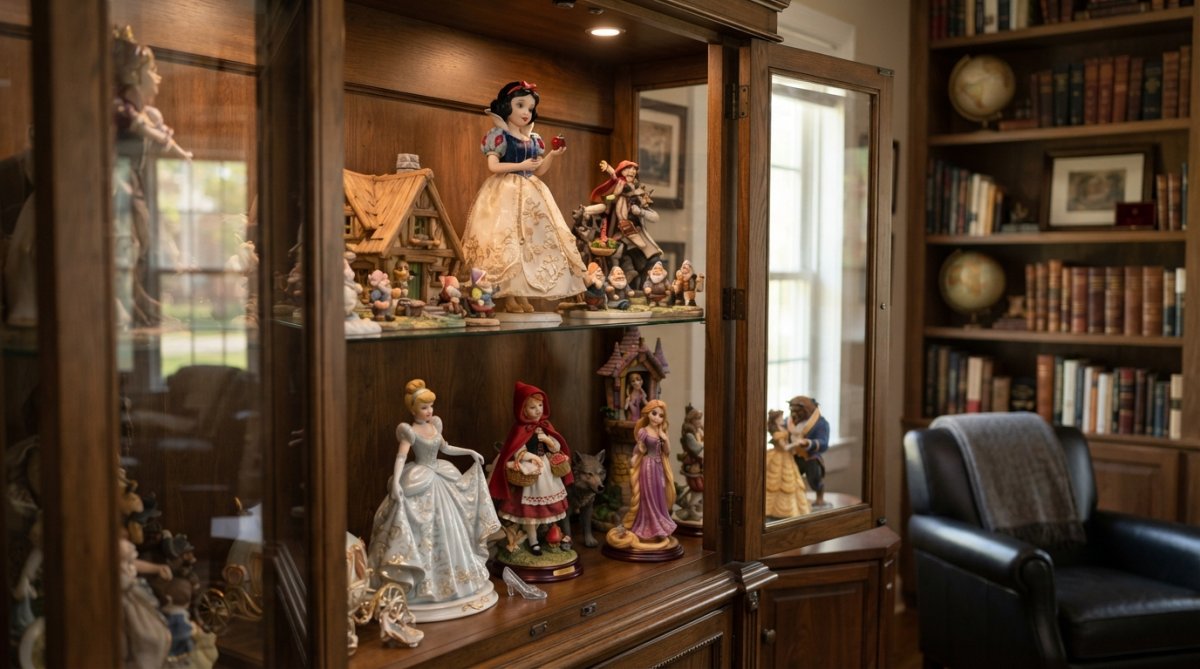
Handcrafted Figurines and Artisan Dolls
Handcrafted figurines and artisan dolls sit at the top of the market. What separates them from mass-market items is the work itself: sculpted detail, hand-painted faces, and materials built to last. A common mistake among new collectors is chasing quantity. In practice, three exceptional pieces outlast thirty ordinary ones.
Look for these markers of quality:
- Hand-painted or hand-finished surfaces
- Numbered editions with certificates
- Artist attribution and studio marks
- Materials such as resin, porcelain, or bronze
Investment and Valuation: What Appraisers Look For
Valuation comes down to four factors: rarity, condition, provenance, and demand. Appraisers weigh all four together, not in isolation. A rare piece in poor condition can be worth less than a common piece in mint condition.
| Factor | What Appraisers Check | Why It Matters |
|---|---|---|
| Rarity | Edition size, discontinued runs | Scarcity drives demand |
| Condition | Chips, fading, original packaging | Flaws cut value sharply |
| Provenance | Certificates, receipts, history | Verifies authenticity |
| Demand | Active collector interest | Sets the ceiling |
Fairy Tale Subscription Boxes: Monthly Magic for Grown-Up Fans
Fairy tale subscription boxes are an entry point into collecting. The model is simple: you pay a recurring fee, the company ships a themed assortment on a schedule, and you keep whatever arrives.
The Three-Month Audit
A common pattern among adult collectors is a cost per kept item that lands two to four times higher than the sticker price of the individual pieces they loved. When that happens, the box is not a bargain; it is a convenience fee. Convenience is a legitimate thing to pay for, but you should pay it knowingly.
Questions That Separate a Real Box From Filler
- Does the company name the artists, studios, or licensors behind each item?
- Are any items numbered, signed, or accompanied by a certificate of authenticity?
- Does the box publish a full contents list before or after shipping, or does it rely entirely on surprise?
- Can you pause, skip a month, or cancel your subscription?
- Do the company's own social posts show real customer unboxings, or only studio photography?
- Is the theme tied to a specific story, illustrator, or era, or is it a generic "fairy" grab bag?
The Authenticity and Sourcing Check
This is the part most subscription coverage skips. Because boxes bundle many small items, they are a common route for unlicensed reproductions of copyrighted characters and illustrations. Before you commit to a box that features recognizable characters from published books or animated films, confirm the company holds or credits a license. The U.S. Copyright Office guidance on reproductions explains what a licensed reproduction looks like and why an unlicensed one has no resale standing in the collector market.
Read the cancellation terms before your first box.
A subscription box is a sampling menu, not a collection.
Fairy Tale Home Decor for Adults: Displaying Your Collection With Style
Fairy tale home decor for adults works best when it feels curated, not cluttered. The goal is a display that reads as intentional, whether it fills a dedicated shelf or a single glass case. Grouping by theme, story, or color creates a cohesive look that a random arrangement never achieves.
A few display principles that hold up:
- Use glass cases to protect pieces from dust and light
- Group by theme rather than scattering items
- Add lighting to draw the eye to focal pieces
- Rotate your display to keep it fresh
Storage and Preservation Techniques for Long-Term Value
Preservation protects both the piece and its resale value. Light, humidity, and dust are the three biggest threats to any collection. Keep items out of direct sunlight, control humidity, and handle pieces with clean hands or gloves.
- Store boxed items flat, away from heat
- Use acid-free tissue for delicate figurines
- Keep certificates in a separate, dry folder
- Photograph each piece for insurance records
How to Start Collecting Fairy Tale Merchandise: A Step-by-Step Approach
Starting a collection is simpler than most people expect, but starting one that holds value is not. The difference is whether you build around a defined focus and document every acquisition, or whether you buy whatever catches your eye and end up with a shelf of unrelated items that no buyer wants as a group.
Step 1: Choose a Focus Narrow Enough to Master
"Fairy tale merchandise" is too broad. A focus should be narrow enough that you can learn the entire market in a few months. Examples of workable focuses:
- A single illustrator, such as Arthur Rackham, Edmund Dulac, or Kay Nielsen, across all editions
- A single story, such as Cinderella or The Little Mermaid, across publishers and decades
- A single maker or studio, such as a specific porcelain house or a working artisan
- A single format, such as first-edition illustrated books or hand-painted figurines
Step 2: Set a Budget With a Reserve Line
Set a monthly acquisition budget and a separate reserve for the one or two pieces a year that are genuinely rare. Most collectors who build meaningful holdings do this: they spend modestly most months and then commit a larger sum when a documented piece appears. Without a reserve, you either miss the piece or finance it badly.
Step 3: Learn the Authentication Markers Before You Buy
Every category has physical tells. Learn them before your first purchase, not after.
- Illustrated books: Check the copyright page for the edition statement, the printer's key (the descending number line), and whether the dust jacket is price-clipped. A first edition with a later printing's number line is not a first edition.
- Porcelain and figurines: Look for the maker's backstamp, the mold number, and any artist signature. Backstamps change over time, and the stamp dates the piece more reliably than the seller's description.
- Artisan dolls: Check for a signed body tag or a numbered certificate. Unsigned dolls from known studios are usually later reproductions.
- Prints and illustrations: Examine the paper for a plate mark (indicating an intaglio print) or a dot pattern under magnification (indicating a modern digital reproduction sold as vintage).
Step 4: Document Every Purchase as If You Will Sell It
Documentation is the single highest-return habit in collecting. For each piece, record:
- Date and place of purchase, with the seller's name
- Price paid
- Photographs of the piece, the backstamp or signature, and any certificate
- Condition notes at the time of purchase
- Any provenance the seller provided, in writing
Step 5: Understand How Value Actually Accrues
Value in this hobby comes from four things working together: rarity, condition, provenance, and active demand. A piece can be rare and still worthless if no one is collecting that maker. A piece can be common and still valuable if it is the version everyone wants in mint condition.
Step 6: Join the Community Before You Need It
Collector forums, regional shows, and specialized auction houses are where pricing information actually lives. Join before you have a question, so that when a rare piece appears you already know who to ask. A collector who never engages with others tends to overpay and miss the best pieces.
Adults who want a low-effort entry into collecting, where curation and discovery matter more than hunting down individual pieces.
The collectors who build holdings chose a narrow focus, learned the authentication markers, and documented every purchase from day one.
Ethical Sourcing and Community: Building a Collection You Can Stand Behind
Ethical sourcing and community are the parts most guides skip, yet they matter most for long-term collectors. Buying from makers who credit their artists, use sustainable materials, and avoid unlicensed reproductions keeps the hobby healthy. You can check U.S. Copyright Office guidance on reproductions when you're unsure whether a piece is licensed.
Frequently Asked Questions
What are the best types of fairy tale collectibles for adult fans?
Adults gravitate toward pieces with craftsmanship and provenance: handcrafted figurines, limited-edition art prints, vintage storybook illustrations, and archival-quality hardcover editions. High-end fairy tale collectibles often include numbered runs from studios known for detailed sculpting, as well as antique dolls with documented makers. The key is choosing items that reflect your personal connection to the story, not just what is trending. Quality materials like cold-cast resin, porcelain, or acid-free paper hold up better over decades and tend to retain value.
How do fairy tale subscription boxes differ from buying individual collectibles?
Fairy tale subscription boxes deliver a curated mix of themed items on a recurring schedule, which builds a collection faster and introduces you to makers you might not find on your own. Individual purchases let you target specific characters or eras. Many adult collectors do both: subscribe for the discovery element and hunt specific pieces at estate sales, conventions, or artisan markets. Before committing, check what past boxes included, whether the theme rotates, and how the service handles pauses or cancellations.
How should I display my fairy tale collection to keep it looking sophisticated?
Treat display like curation. Group pieces by theme or color story rather than spreading everything across every surface. Use glass-front cabinets or floating shelves to protect items from dust and UV light. Add museum-style lighting with warm bulbs, and rotate pieces seasonally so the display stays fresh. Fairy tale home decor for adults works best when it complements your existing interior instead of competing with it. Keep the most valuable or fragile pieces out of direct sunlight and away from high-traffic areas.
What is the difference between mass-produced and collectible fairy tale merchandise?
Mass-produced items are made in large runs with standardized materials and often carry no edition number. Collectible pieces are typically produced in limited quantities, sometimes hand-finished, and come with documentation such as a certificate of authenticity or artist signature. That documentation matters for appraisal and resale. If you plan to build value over time, prioritize pieces with clear provenance, original packaging, and a known maker. Mass-produced items can still be enjoyable, but they rarely appreciate.
The real challenge in collecting fairy tale merchandise is knowing what's worth keeping and what's just noise. ONCE UPON A PACKAGE solves that with curated fan boxes built around specific character themes, monthly delivery, and a focus on cherished franchises rather than generic filler. Each box is designed to bring dreams to life and make every unboxing feel like it mattered. Get started with ONCE UPON A PACKAGE and build a collection you're proud to display.